News
News & Events
13 November 2025
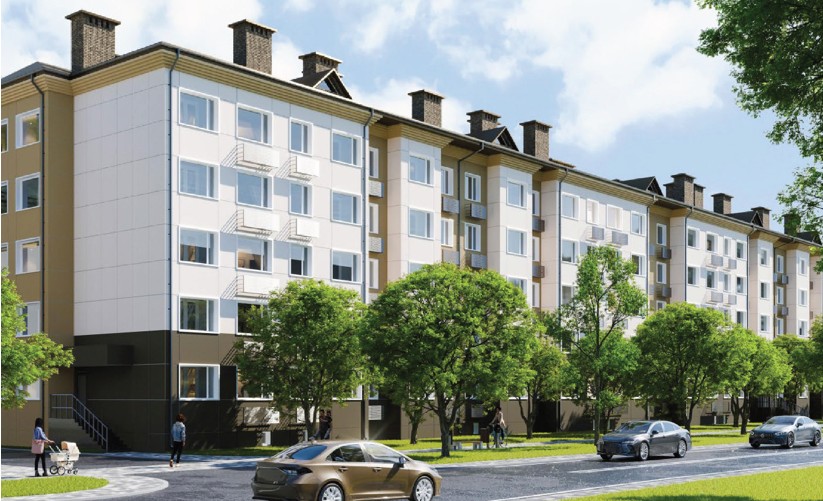
Image: Simulation of the pilot house after renovation, © dena
Kazakhstan's housing stock needs comprehensive energy modernization!
With rising utility rates and a deteriorating housing stock, Kazakhstan is increasingly faced with the need to shift from incremental repairs to systemic solutions. The building sector in Kazakhstan is growing steadily: it already consumes 47% of all energy, of which 34% is accounted for by residential buildings. The “Strategy for Achieving Carbon Neutrality in the Republic of Kazakhstan by 2060,” adopted in 2023, places particular emphasis on modernizing the building stock and improving its energy efficiency.
The national program “Modernization of the Energy and Utilities Sectors” for 2025–2029 identified the problem and set ambitious goals: to modernize at least 200 natural monopolies and at least 30 cogeneration plants, reduce accidents by 20%, and bring average deterioration to ~40%. A total of 13.588 trillion tenge has been allocated for this, including 6.208 trillion for energy, 6.778 trillion for the utilities sector, and 602 billion for automation and equipment with measuring and control devices; interest subsidies have also been provided for. This is an unprecedented infrastructure project in terms of its scale.
The program focuses specifically on energy generation networks and facilities. It does not include any direct tasks related to the thermal modernization of buildings or residential houses. This is something to keep in mind. Building new and upgrading old cogeneration plants while renewing the deteriorated grids will boost energy production but also increase transmission losses. By failing to insulate our buildings meanwhile, we’ll simply keep heating the street.
The most problematic part in the housing sector are multi-family homes (MFH) (97% privatized), as decisions on building modernization are made by a majority vote of apartment owners. Reaching a consensus on modernization is a complex process, especially given the varying financial capabilities of residents.
It is worth noting that since 2010, Kazakhstan has had state programs to support apartment owners in MFH renovating their buildings. However, these programs do not fully cover the costs of comprehensive building modernization, including energy-saving measures.
Comprehensive energy-efficient modernization of MFH (Multi-Family Houses) is not just a replacement of individual elements but requires a new approach. Unlike traditional overhauls, this format includes technical re-equipment, reduction of energy consumption, increased comfort, and extended service life of buildings.
The pilot project for comprehensive energy-efficient modernization of MFH buildings in Kokshetau, funded by the German Society for International Cooperation (GIZ) program FELICITY II, set itself a broader goal to establish a sustainable model of interaction between residents, management companies, and city authorities and to identify barriers to energy modernization. The project was based on a strategy of continuous and open dialogue with all stakeholders, especially the residents of the pilot building. The Housing Initiative for Eastern Europe (IWO) was responsible for the dialogue with the apartment owners, the management company, and the Kokshetau City Administration.
In the documents listed below you can learn about the pilot project, the organization of dialogue with residents and other stakeholders, and the main conclusions of the project:
For any requests please contact Larissa Schreckenbach.
- Information bulletin “Comprehensive energy-efficient modernization: pilot project in Kokshetau” ─ detailed description of activities in Kokshetau and information material provided to apartment owners and residents of the pilot building
- Brochure “Proposal for Energy Modernization of MFH” ─ explains energy-saving and non-energy-saving construction measures; describes the actual condition of building components before and after modernization
- Survey of residents' opinions on the energy modernization of the pilot building ─ subject of the survey: 1) satisfaction with apartment temperature; 2) attitude towards energy conservation in the building; 3) housing maintenance costs: heat, hot water, electricity; 4) motivation of apartment owners (willingness to invest in energy-saving modernization)
- Brochure “Information material on the comprehensive energy-efficient modernization of the MFH” ─ information is provided to prepare for the residents' meeting, namely: notification of the meeting, meeting agenda, description of the main activities and project cost of comprehensive energy-efficient modernization, financing scheme, as well as a description of the stages of the state program for the capital repair of apartment buildings and an overview of the benefits that can be obtained as a result of the proposed comprehensive modernization.